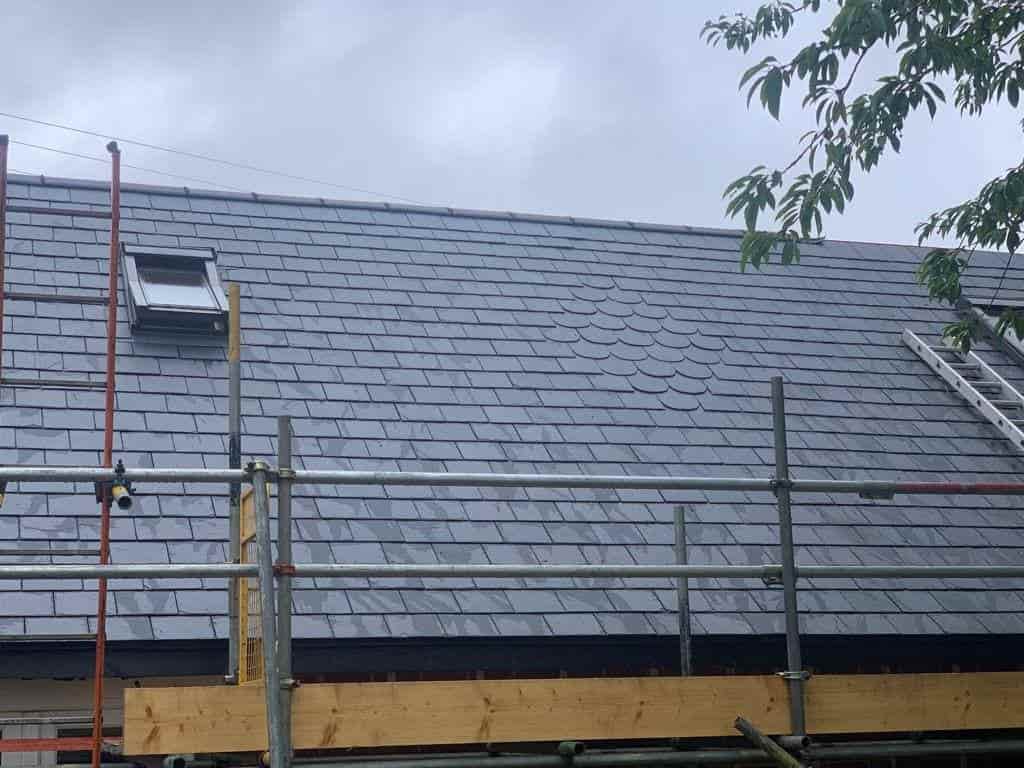
When a roof has developed significant deterioration, re-roofing can provide a dependable way to restore its performance. However, replacing the entire roof is not automatically necessary in every situation. Some properties may have deterioration concentrated on one roof slope or a clearly defined section, making partial re-roofing a practical option. In other cases, problems are sufficiently widespread that renewing the complete roof provides the more appropriate long-term solution.
At Gillingham Roofing Services, we provide professional roofing services throughout Gillingham, Kent, carefully assessing existing roofs before determining the extent of work required. The decision between full and partial re-roofing should always be based on the actual condition of the roofing system rather than appearance alone.
What Is Partial Re-Roofing?
Partial re-roofing involves renewing a substantial but clearly defined section of an existing roof while retaining other areas that remain serviceable.
For example, one roof slope may have deteriorated more severely because of its exposure, previous damage or the condition of the materials beneath it. If adjoining sections remain structurally sound and continue to provide reliable weather protection, replacing only the affected area may be appropriate.
The important consideration is whether the new and retained sections can function effectively together.
What Does Full Re-Roofing Involve?
Full re-roofing involves renewing the roof covering across the complete relevant roofing system rather than concentrating on one deteriorated section.
Removing the existing covering also provides access to underlying areas so that components such as underlay and battens can be inspected and renewed where necessary.
Full re-roofing is more likely to be considered where deterioration is widespread or several parts of the roof are beginning to experience similar problems.
The Extent of Surface Deterioration
One of the first factors a roofer will consider is how much of the roof covering has deteriorated.
Partial re-roofing may be suitable when problems are restricted to one identifiable area. However, complete renewal may be more appropriate where there are:
- Damaged materials across several roof slopes
- Large numbers of slipping tiles or slates
- Extensive weathering
- Multiple areas of recurring deterioration
- Defects appearing throughout the roof
The wider the deterioration becomes, the less practical it may be to treat individual sections independently.
The Condition of the Remaining Roof Matters
Partial re-roofing only makes sense when the section being retained has sufficient serviceable life remaining.
A roof may have one visibly poor section, but the surrounding covering should also be assessed carefully. If those areas are already showing advanced deterioration, replacing only the worst section could simply mean that further substantial work becomes necessary elsewhere later.
A professional inspection therefore considers both the damaged area and the parts that appear satisfactory.
Underlay and Battens Can Influence the Decision
Tiles and slates are only the visible part of the roofing system.
Underneath them are important components such as roofing underlay and battens. If these materials have deteriorated across much of the roof, concentrating solely on one external section may not address the broader problem.
Signs of widespread deterioration beneath the covering can make full re-roofing more appropriate because the underlying roofing layers can be renewed comprehensively.
The Location of Existing Leaks
The pattern of water ingress can provide useful information about the condition of a roof.
One leak associated with a clearly identifiable defect may support a localised approach. Repeated leaks appearing in unrelated areas can suggest something more extensive.
A roofer will investigate whether moisture is entering through:
- Individual damaged coverings
- Flashing
- Valleys
- Roof junctions
- Deteriorated underlay
- Multiple ageing sections
The aim is to understand why the roof is leaking rather than simply responding to where damp becomes visible internally.
Previous Repair History Provides Important Clues
A roof that has required numerous repairs over several years should be considered differently from one that has remained largely trouble-free.
If one section has consistently caused problems while the remainder performs well, partial renewal could potentially address that particular weakness.
If repairs have been carried out across many unrelated areas, however, this may indicate that the complete roofing system is reaching a similar stage of deterioration.
Different Roof Slopes Can Age Differently
Not every part of a roof experiences identical conditions.
Differences in exposure, orientation, surrounding features and previous maintenance can mean one section deteriorates more quickly than another.
This is one reason partial re-roofing can sometimes be appropriate. A professional roofer can determine whether the deterioration genuinely affects one distinct section or whether apparently better areas are also approaching the point where renewal would be advisable.
Roof Junctions Need Careful Consideration
The point where a newly roofed section meets retained roofing materials requires careful planning.
Junctions must maintain effective weather resistance and create a suitable transition between old and new sections. Valleys, ridges, abutments and other details may influence whether partial re-roofing can be completed effectively.
If dividing the work would create unnecessarily complicated or vulnerable junctions, complete renewal may offer a more coherent roofing solution.
The Condition of the Roof Structure
Before deciding how much of a roof should be renewed, the condition of accessible supporting components should also be considered.
Long-term water ingress can sometimes affect areas beneath the visible covering. Where deterioration extends beyond one isolated section, the scope of work may need to increase accordingly.
Re-roofing should provide a suitable foundation for dependable future performance rather than simply renewing what can be seen externally.
Consistency Across the Roofing System
Another consideration is how well retained and renewed sections will work together.
A partially re-roofed property will contain roofing materials of different ages. This is not necessarily problematic when the retained areas remain in good condition, but it becomes less practical when those sections are already significantly weathered.
Full re-roofing creates greater consistency because the major roofing components are renewed as part of one coordinated installation.
When Partial Re-Roofing Can Make Sense
Partial re-roofing may be appropriate where:
- Deterioration is clearly confined to one section
- The remaining roof covering is sound
- Underlying components elsewhere remain serviceable
- Existing problems have an identifiable localised cause
- Suitable junctions can be formed between retained and renewed areas
In these circumstances, there may be no practical reason to disturb roofing materials that are still performing correctly.
When Full Re-Roofing May Be More Appropriate
Complete renewal is more likely to be considered when:
- Deterioration affects several areas
- Different leaks continue developing
- The roof has undergone repeated repairs
- Underlay or battens are extensively deteriorated
- Roofing materials are generally approaching the end of their useful service
- Retaining old sections would provide limited long-term benefit
The objective is not to replace more roofing than necessary, but to avoid undertaking partial work where the remaining roof is already likely to require substantial attention.
Why Professional Assessment Is Essential
The distinction between localised and widespread deterioration is not always obvious from ground level.
At Gillingham Roofing Services, we assess roofs throughout Gillingham, Kent, to understand the condition of the covering, vulnerable junctions and underlying components before recommending the extent of re-roofing required.
A detailed assessment helps ensure that the work addresses the actual condition of the roof. Where partial renewal is sufficient, sound areas can remain undisturbed. Where deterioration is more extensive, complete re-roofing can provide a more coordinated and dependable result.
Re-Roofing Should Be Planned for Long-Term Performance
Whether full or partial re-roofing is selected, the objective should be the same: restoring reliable weather protection and resolving the causes of existing problems.
Good roofing work considers how all components interact rather than concentrating only on installing new tiles or slates. Preparation, underlay, battens, flashing, junctions, ventilation and drainage details can all contribute to the performance of the finished roof.
This complete-system approach is what makes professional assessment and workmanship particularly important.
Conclusion
The decision between full and partial re-roofing depends primarily on the extent and distribution of deterioration. Where problems are confined to a distinct section and the remainder of the roof remains sound, partial re-roofing can provide an effective solution. Where ageing, leaks and underlying deterioration affect several areas, complete renewal may provide greater long-term reliability.
The condition of the roof covering, underlay, battens, junctions, supporting components and previous repairs should all contribute to the decision. This is why a professional roof assessment should always come before determining the scope of re-roofing work.
If your roof in Gillingham, Kent, is showing signs of significant deterioration, Gillingham Roofing Services can assess its condition and determine whether repairs, partial re-roofing or complete renewal would be the most appropriate approach. Contact our team to arrange an inspection and discuss a professional roofing solution suited to your property.
Call us on: 01634 561193
Click here to find out more about Gillingham Roofing Services
Click here to complete our contact form and see how we can help with your roofing needs.