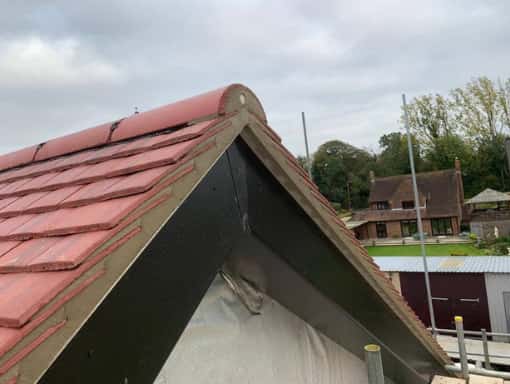
Most roofs develop occasional defects during their service life, and many of these can be dealt with through targeted repairs. A slipped tile, an isolated flashing defect or a small leak does not automatically mean that the complete roof needs replacing. The more important question is whether the problem is genuinely localised or part of a wider pattern of deterioration.
For property owners in Gillingham, Kent, recognising the warning signs of declining roof condition can help determine when continued repairs remain appropriate and when replacement deserves consideration. A professional roof assessment looks beyond the latest visible problem and considers how reliably the roof is performing as a complete system.
How Can You Tell When Roof Replacement May Be Necessary?
No single warning sign should automatically lead to roof replacement. The condition of the roof covering, supporting materials, junctions, previous repairs and overall performance all need to be considered together.
Where deterioration has become widespread or several problems repeatedly occur at the same time, replacing the roof may eventually provide a more appropriate solution than continuing to repair individual defects.
Roof Repairs Are Becoming More Frequent
One of the most useful indicators is the frequency of repairs.
An occasional problem separated by a long period of dependable performance does not necessarily indicate wider failure. However, when new defects begin appearing shortly after previous work, the pattern becomes more significant.
If different parts of the roof continually require attention, it may suggest that several components are reaching a similar stage of deterioration.
Leaks Keep Appearing in Different Areas
One isolated leak can often be traced to a particular defect.
Multiple leaks developing in separate areas can indicate a broader problem.
Water can travel beneath roof coverings before becoming visible internally, so the position of a ceiling stain does not always reveal the precise entry point. A professional inspection can establish whether several symptoms share a common cause or whether different sections of the roof are deteriorating independently.
The Same Leak Continues to Return
A recurring leak should not simply be repaired repeatedly without investigating why it keeps returning.
The original defect may extend beyond the previously treated area, or water may be entering from another location and travelling beneath the covering.
Where repeated repairs fail to provide dependable performance, the surrounding roof construction needs closer assessment.
The appropriate solution may still be localised, but the cause should be understood before further work is decided.
Tiles or Slates Are Frequently Slipping
A single slipped tile or slate can often be repaired without difficulty when neighbouring materials remain sound.
Repeated slippage across several areas presents a different picture.
Fixings may be deteriorating, individual coverings may have weakened around fixing points, or supporting materials beneath the surface may require attention.
If more and more coverings become displaced, simply replacing individual units may stop addressing the wider condition.
Large Areas of the Roof Covering Are Deteriorating
Roof replacement becomes more relevant when deterioration is no longer confined to a small section.
Numerous cracked, damaged, loose or fragile coverings can indicate that the roof is declining more generally.
A successful local repair depends partly on having dependable surrounding material to connect with. When neighbouring areas are also deteriorating, repeatedly creating isolated repairs becomes increasingly difficult.
Roofing Materials Have Become Fragile
Roof coverings can become more vulnerable as they weather.
Where tiles or slates remain fundamentally sound, isolated replacements may continue to be practical.
Concern increases when surrounding materials are easily damaged or have deteriorated across substantial areas.
This can make repairs progressively more disruptive because accessing one defect may reveal additional weaknesses nearby.
The Roof Surface Has Become Noticeably Uneven
Changes to the overall roof surface should be investigated.
Sections that appear dipped, uneven or noticeably different from adjoining areas can indicate a problem requiring more than a superficial repair.
The cause cannot be determined from appearance alone.
A professional assessment can examine whether the issue is localised or whether supporting components across a wider area require attention.
The Roofline Appears to Have Changed
A roofline that has visibly changed deserves closer examination.
Homeowners who see their property every day may not immediately notice gradual alterations, so comparing how different sections relate to one another can sometimes reveal changes.
An irregular roofline does not automatically mean complete replacement is required, but understanding the cause is important before deciding on the appropriate work.
Problems Are Developing Beneath the Visible Covering
Tiles and slates are only the outermost part of a roofing system.
Their performance also depends on components beneath them, including battens and underlay.
If deterioration is confined to a handful of coverings, targeted repair may be sufficient. Where problems extend into the supporting layers across substantial sections, surface repairs alone may become increasingly limited.
A replacement roof can sometimes be appropriate because several connected components need renewing rather than because the visible tiles or slates alone have failed.
Underlay Has Become Part of the Problem
Roofing underlay provides additional protection beneath the primary covering.
Its condition can become increasingly relevant as the roof ages, particularly when coverings have moved or defects allow moisture beneath them.
Localised deterioration does not necessarily justify replacing the whole roof.
However, where underlay problems occur alongside widespread deterioration of other roofing components, more comprehensive renewal may need to be considered.
Ridge Areas Are Repeatedly Requiring Attention
Localised ridge defects can often be repaired.
The concern arises when problems extend along substantial sections or repeatedly return in different areas.
If ridge deterioration is occurring alongside defects elsewhere on the roof, it contributes to the broader picture of declining reliability.
A professional inspection should consider the ridge together with adjoining coverings rather than treating every defect independently.
Valleys Are Becoming Persistent Problem Areas
Roof valleys are important drainage routes and depend on surrounding materials remaining appropriately positioned and serviceable.
A single valley defect may be repairable.
Where deterioration repeatedly develops or adjoining roof coverings are also in poor condition, the problem may form part of wider roof decline.
Assessing the complete area helps determine whether another local repair is appropriate.
Flashing Problems Are No Longer Isolated
Flashing protects vulnerable roof junctions.
A defect around one area can often be addressed through targeted repair.
When several separate flashing details are deteriorating at the same time as the main roof covering, however, there may be multiple connected maintenance requirements.
The significance lies in the combined condition of the roof rather than any single piece of flashing.
Previous Repairs Cover More and More of the Roof
Having repairs carried out over the years is entirely normal.
What matters is how extensive they have become.
If numerous sections have been patched, renewed or altered and fresh defects continue appearing elsewhere, the roof may gradually be transitioning from an original covering with occasional repairs into a collection of increasingly connected repair areas.
At that point, assessing the complete roof can provide a clearer picture than concentrating solely on the latest problem.
Previous Repairs Are No Longer Solving the Wider Issue
A repair can only address the defect it was designed to resolve.
It cannot prevent neighbouring materials from deteriorating independently.
If previously repaired areas remain sound but new problems continually appear around them, the issue may be the general condition of the remaining roof rather than failure of the individual repairs.
This distinction can be important when deciding whether continued localised work remains practical.
Poor Weather Regularly Reveals Another Weakness
Periods of wind and prolonged rain can expose vulnerable areas of an ageing roof.
One weather-related defect does not necessarily indicate that the complete roof is failing.
However, if each period of challenging weather seems to produce another slipped covering, leak or damaged section, overall reliability deserves closer attention.
The pattern can indicate that multiple areas are becoming increasingly vulnerable.
Internal Water Marks Are Becoming More Common
Ceiling stains, damp patches or other signs of moisture should be investigated rather than simply monitored.
If these symptoms repeatedly appear in the same area, the original source may not have been fully identified.
If they begin developing in different locations, several roof defects may be present.
Visible internal symptoms should be considered alongside an external assessment to understand what is actually happening within the roofing system.
Minor Leaks Should Not Be Dismissed Because They Are Intermittent
Some leaks appear only during particular combinations of wind and rain.
Once the weather changes, the problem can seem to disappear.
Intermittent water ingress still indicates that moisture has found a route through the roofing system.
The cause may be relatively small and repairable, but repeated intermittent leaks across an ageing roof can contribute to evidence of declining overall performance.
Repairs Are Becoming Increasingly Extensive
The scale of work required can change over time.
A roof that once needed an occasional tile replaced may eventually require progressively larger sections repairing.
If every new defect involves a wider area than the previous one, deterioration may be spreading beyond isolated points.
This is a useful indication that the roof should be considered more comprehensively.
Connected Defects Can Suggest Broader Deterioration
Roofing components do not function independently.
Coverings meet valleys, ridges, flashing and other details, while all rely on appropriate supporting materials.
Where deterioration affects several connected components, repairing each one separately can become less effective as an overall strategy.
Replacement may eventually be appropriate when renewing the roofing system together provides a more coherent response to widespread decline.
The Roof Has Become Difficult to Repair Reliably
Local repairs are most successful when the surrounding roof remains dependable.
If adjoining materials are fragile, loose or deteriorated, creating a sound repair becomes more challenging.
There can eventually be a point where the problem is not simply the defective section but the lack of reliable surrounding material.
This is one of the more important practical signs that replacement deserves consideration.
The Roof Has Lost Its Dependability Between Repairs
A roof should provide consistent protection rather than requiring continual reactive attention.
If homeowners are regularly waiting for the next defect to appear, the issue has moved beyond one particular slipped tile or leak.
Overall reliability is therefore an important consideration.
A roof does not have to fail completely before its declining dependability becomes relevant.
Age Can Provide Context, but Should Not Decide the Outcome
Older roofs naturally deserve closer attention when problems become more frequent.
However, age alone is not a sufficient reason for replacement.
A mature roof that remains structurally suitable and develops only occasional isolated defects may continue to be repairable.
Another roof may develop widespread deterioration earlier.
The actual condition and repair history should therefore carry more weight than age by itself.
Appearance Alone Is Not Proof That Replacement Is Needed
A roof can look weathered without being fundamentally unreliable.
Surface discolouration and general ageing do not necessarily indicate that the roofing system has failed.
Equally, a roof can appear relatively tidy from ground level while containing defects that are difficult to see.
Replacement decisions should be based on inspection and performance rather than appearance alone.
One Missing Tile Does Not Mean You Need a New Roof
It is important not to overstate the significance of isolated damage.
A missing or cracked tile, small flashing defect or clearly contained leak can often be repaired when the surrounding roof remains serviceable.
A recommendation for replacement should reflect wider evidence.
The extent of the work should always be proportionate to the extent of deterioration.
One Damaged Roof Section May Still Be Repairable
Different areas of a roof can deteriorate at different rates.
If one section has a particular defect but neighbouring sections remain dependable, repairing or renewing the affected area may be appropriate.
Professional inspection helps establish the boundary between local deterioration and problems that genuinely affect the wider roof.
Replacement Becomes More Relevant When Several Signs Appear Together
One warning sign rarely tells the complete story.
A roof with one slipped tile presents a very different situation from a roof with repeated slippage, several previous repairs, deteriorating underlay and recurring water ingress.
The combination of symptoms is often what matters most.
As more connected signs develop, the case for considering comprehensive renewal becomes stronger.
A Replacement Roof Should Address a Genuine Roofing Need
A new roof is significant work and should not be recommended unnecessarily.
At Gillingham Roofing Services, we assess roofing problems in Gillingham, Kent by considering the latest defect alongside the overall roof covering, supporting components, previous repairs and pattern of performance.
Where a targeted repair can restore an otherwise serviceable roof, that may remain the appropriate solution. Where deterioration has become widespread and reliable local repairs are increasingly difficult to achieve, replacement can be considered based on the actual condition of the roof.
The objective is to recommend the level of work the property genuinely requires rather than assuming that every older or damaged roof needs complete renewal.
Conclusion
The warning signs that a property may need a replacement roof are usually found in a pattern rather than one isolated problem. Increasingly frequent repairs, recurring leaks, widespread damaged coverings, deteriorating supporting materials, multiple problem areas and difficulty achieving dependable local repairs can all indicate that the roof is approaching the point where comprehensive renewal should be considered.
However, one leak, slipped tile or damaged section does not automatically justify replacement. Where defects remain isolated and surrounding materials are sound, professional repair can still be an appropriate solution.
If your roof in Gillingham, Kent is developing repeated problems and you are unsure whether it remains suitable for repair, contact Gillingham Roofing Services. We can assess the overall condition of the roof and recommend an appropriate approach based on what genuinely needs attention.
Call us on: 01634 561193
Click here to find out more about Gillingham Roofing Services
Click here to complete our contact form and see how we can help with your roofing needs.